Translate? Traduire? übersetzen? ?לתרגם Traducir? Tradurre?

Monday, April 11, 2016

Geography Again

Now that I am really learning my geography, and I know where even the newest countries are--even disputed territories, even the tiniest ones--I find that I am taking a personal interest in them.

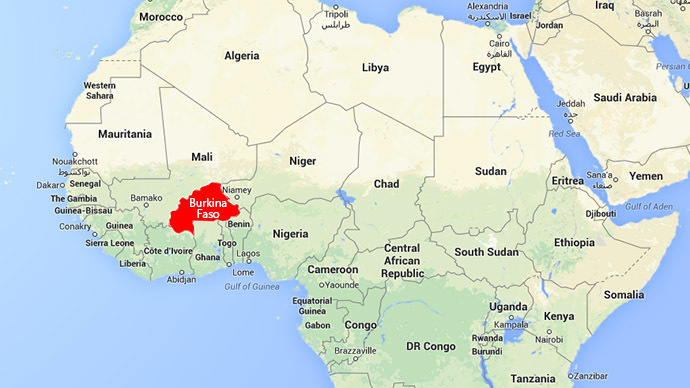
I'm excited that Burkina Faso will be playing Uganda in football (what Americans call Soccer) and I'm concerned about Boko Haram's attacks there, in a region already in trouble due to Nigeria's instability and the reappearance of Ebola in Liberia, Ghana and Sierra Leone. Look how small those latter countries are and how close together. You can see how Ebola in the region would travel through the forest. Look how it fits together.  

Speaking of how things fit together,  the news lately has been focused on the sensitive area of Nagorno-Karabagh, a long-standing point of contention between Armenia and Azerbaijan, I know that Nagorno-Karabagh sits in a little pocket between Turkey, Iran and Russia, next to another small country, Georgia. Glance at the map--you can see immediately that instability in a region already shuddering from Syria's instability does not need a further war.  The area is, yes, in Azerbaijan, but is controlled by Armenia's. When you figure in that Azerbaijan is mostly Muslim, Armenia mostly an Eastern Orthodox version of Christianity, and you add that 90% of Azerbaijan's economy is linked to oil, while Armenia is dependent on trade and raw resources, like oil, the area is a hot point. Especially when you figure in Putin and his dedication to arms sales. 
image from the latest outbreak of fighting
I'm beginning to think that every news story should include a map, and a topographical map. Imagine if you were sitting in, say, Rifle, Colorado, or Visalia, Missouri and your tiny newspaper's story about Ebola included a forestry map, making clear that the wilderness in West Africa is all interconnected, and travel of the virus doesn't have to follow roads or stay within boundaries! Imagine if that were included in every online news story, top of the page. Do you think that would help Americans, who are notoriously ignorant about the rest of the world, be more connected? After all, a year ago, I might have thought Burkina Faso was in Asia somewhere.  

Side Benefits to Practical Classes--New Friends

So, class two days ago. What did I learn? I'll get to that--
First, I want to talk about Marcia, who was sitting next to me. I can't wait to get together with her. She's writing a memoir about how, at age six, she integrated a public school. 

Now, most of us know about Rosa Parks, right? That she was tired and her feet hurt so she refused to move--that's the story we're told, anyway. Most of us don't know that Rosa Parks was a secretary for the NAACP, which meant that she drove solo around the deep south at a time when a black person driving anywhere was dangerous, only she heading out to do research lynchings and reports of rape--driving into communities already on edge, already wanting to repress those uppity N----ers who it was feared had had the temerity to call in the NAACP. 


Some of us might also have heard about Claudette Colvin, a teenager who refused to move from her seat on the bus, nine months before Rosa Parks. Colvin's action was spur of the moment, inspired by a paper she'd written for school the day before, about how blacks couldn't try on clothing or use the dressing rooms at the local department store. "You had to take a brown paper bag and draw a diagram of your foot. . .and take it to the store." In her testimony, Colvin said, "I kept saying, 'He has no civil right. . . this is my constitutional right. . .you have no right to do this.' And I just kept blabbing things out, and I never stopped. That was worse than stealing, you know, talking back to a white person." 

But Colvin was a teenager, and unmarried and pregnant.  The planners thought it would be too easy to dismiss her, or worse, turn this studious little girl into a stereotype of a loose, over-sexual minority. "My mother told me to be quiet about what I did," Colvin said later. "She told me to let Rosa be the one. White people weren't going to bother Rosa. They like her." 

So it was Rosa, adult, married, quiet, respectable, whose tired feet were carefully planned, who became the public face of the Montgomery Bus Boycott, and even then, Ms. Parks had to keep quiet about her earlier courageous acts, and about her training at the extraordinary Highlander Folk School, which would have carried the taint of communism.


It's the same with the story of Ruby Bridges. Some of us might know that were three other little girls who integrated a New Orleans school at the same time, but at a different school--McDonogh--and together. Leona Tate,  Tessie Provost and Gail Etienne, they are known, for some silly reason, as the McDonogh Three. But even they, like the high schoolers at Little Rock, are only the beginning of the story.  And each story has so much value. 

For instance, although I know from photos that my mother's classroom here was integrated, I have talked to the father of a friend who integrated a local middle school in this same town. No, he and his siblings weren't bussed in. Instead, they were given city bus passes. This man described those early days when the bus stopped to let them off at school and a big white kid pulled a knife on him. Round and comfortable now, he laughs about trying to squiggle his skinny little butt past the line of people waiting to exit, but at the time, it was terrifying. He also speaks movingly of the great divide of his life, of going home with a classmate for lunch, (kids could go home for lunch in those days) only to be served a meal by his grandmother, who was working for his classmate's family as a maid. 

She pulled him aside to hiss at him that he was never to return. And she brought him home hand-me-down clothing from her jobs, many belonging to other classmates. "Hey, that's my shirt," they would say, and he would cringe inside. 

Marcia, who went on to Howard University and taught school for many years, has her own experiences to translate and absorb. She's retired now, mostly, which is giving her time to think through the days when the grownups around her decided to make her a foot soldier in the battle to change the world. I know her memoir will be so important for so many people, including the many people involved in a new movement called Black Lives Matter. I feel so fortunate to have met Marcia. We cannot wait to get together with one another. In fact, we've already set our first date. A new friend, an exciting writing buddy-- side benefit to an informative, exhausting class. 


Sunday, April 10, 2016

One More The Tudors Post--And Adding In The White Queen

Thanks to the suggestion of brilliant novelist, Jonathan O'dell, I have begun to watch, in my extremely limited spare time, a British series called The White Queen, which is about Elizabeth Woodville Grey, a daughter of mid-level gentry who became the Queen of England, the mother of a queen of England, and the grandmother of Henry VII. So, yes, this is about the beginning of the Tudor dynasty, more or less. (Don't you miss Hans Holbein? Well, it looks like somebody painted her in that style, years after her death--here--)

The White Queen is based on several novels by Philippa Gregory, (The White Queen, the Red Queen and The Kingmaker's Daughter.) 
I try not to speak disrespectfully of other novelists, so I will say that Philippa Gregory has, let's see: 

1) Created new interest in areas of history that were little explored before.
2) Managed to sensationalize stories that were already sensational
3) Oh, what the hell. I give up being generous. I get furious with her books. She twists known history, like turning Mary Boleyn into the innocent, sweet, younger sister of evil Anne Boleyn, when Mary was most likely older, had been Henry's mistress before Anne, and was known, from the sister's very early days when both were ladies in waiting in the French court, as "the English mare," (i.e., she'd been rode so often. .  .) And the stuff about Anne in her books is taken from the worst nasty gossip, which she reports as Gospel truth. In fact, she--oh, that's enough. I'm not interested in ranting. 

So, I approach the series with caution, though so far, it seems fairly innocuous, except that Woodville's mother, Jaquetta of Luxembourg (who sports a highly edified English accent, of course) claims to be a witch, descended from the water snake, Melusine. Which I would have loved when I was, say, sixteen, though now, the very idea causes me to give a very sixteen-year-old roll of the eyes.  Now--it's very possible that Jaquetta of Luxembourg did, in fact, curse the Tudor family, via a genetic condition, but that's a different story. 

But, at least so far, the actresses have strong faces and terrific, Tudor noses. (Amanda Hale, Rebecca Ferguson, Faye Marsay, Janet McTeer, Caroline Goodall.) 

So, we shall see. . .

Saturday, April 9, 2016

Hallo, Künstler in Deutschland--Wenn ich es falsch, sagte, die Schuld Google - übersetzen.

Ich habe zwei regelmäßige Leser in Deutschland. Ich wollte um Hallo zu  sagen. Es ist seltsam und wunderbar von euch beide dort zu denken. Hallo und Dankeschön. 


All Day Workshop on Grant and Residency Application Writing.


Whew. That was fabulous and exhausting. Notice the board is pink? We were all women. I thought they all had such interesting projects. I loved watching my classmates'  faces relaxing as we got to know one another and spoke about things that really matter in this world--things we were excited to be writing about. 


The teacher was funny and real and knowledgeable. (We, in class, got to see her whole face.) I learned a great deal that I'm too tired to summarize. 


Besides, I have dinner to get. 


But, I told the class I'm blogging every day, so I have to blog today, too, right? 

This woman is at a retreat at La Casa, in Andalusia, Spain. 


 This is at The Porches, in  Norwood, Virginia. Doesn't that look luscious? And I've talked to Trudy Hale, who runs it, with a voice like warm maple syrup. 

Sigh. No more dreaming about retreats or grants to get retreats. Back to work--kids, dinner and house tonight, and tomorrow, more of same. And then, I have to finish planning the grant before I can write up the proposal. 

Wish me luck. 


Friday, April 8, 2016

City On Fire

I'm still reading City On Fire, the novel about New York City in the 1970's, leading up to the great black out and riots of 1977. I am enjoying it deeply. So far, I have met our first couple, gay, and our second young man, a skinny adolescent with a pimple on his thigh--can people even get pimples on their thighs, he thinks. 

I'm feeling intimidated. So far, it's really, awfully good. Of course, I'm about one and a half chapters in. 

So I'm trying to give myself pep talks. My novel is just as good, only different. Right? 
God, I hope so. 


Anybody else reading the novel? Want to compare notes? 

The Gift of Listening

I have a love/hate/do- you-even-exist? relationship with what I think of, respectfully, as The Great Mystery. Mostly, I don't believe in God, except when I am listening to someone with a kind of deep listening that gets me out of the way. 

This happened last week at the seder,  as I mentioned before, with a couple whose little daughter is caught in war torn Iraq. Listening to them, holding the mother as she cried, was not about me, or my pain, or my solutions. It was about them, about her, about allowing her to safely have her grief. Grief can be so hard to feel alone. It is so much better shared.  I was--at times like that I feel--as though I am a stand-in for God, a conduit for love. I am simply the hands that hold the pain. 

Last week, I ran into a woman at the grocery story. We have spoken before, at length, honestly. (I'm very bad at small talk, so mostly, I speak honestly.) She asked how I was, and I told her: I have a child with a disability. Today, it's rough. Today, I'm scared for my child. Today, I think I'm doing the parent thing very badly. 

And I felt--just for that instant, so much better. I felt connected, through her listening, to my own pain. I didn't have to run from it. I didn't have to fix it. It could just be there. I could just be there with it, with her. I felt a moment of calm, of stillness. I felt--witnessed. 


And then, she opened her mouth. To give me advice.  This thing would take care of my child's disability, she said. And when I tried to explain that she didn't understand the situation, she told me another solution. And then another, all with a warm smile and a listening face, though every word showed how little she understood the problem. 

And just like that, the rest I had felt, that moment of breath, of lightening, was gone. 

Don't get me wrong, I'm not against advice. Sometimes, we need fixing. Sometimes, people have information that will save the day. And yet--how challenging it is to know when to fix and when to listen. How often we should remember--not just with pain, but in political discussions, when speaking to someone who is trying to proselytize, and even in the confusions of daily living--that listening, in and of itself, holds such power.